Ukraine Faces Drone Disruptions After Starlink and Starshield Throttling
Ukrainian military operations were hampered last week by speed restrictions on SpaceX satellite networks, sparking debate over the extent of U.S. and private control over the technology.
By News Media House Staff ·
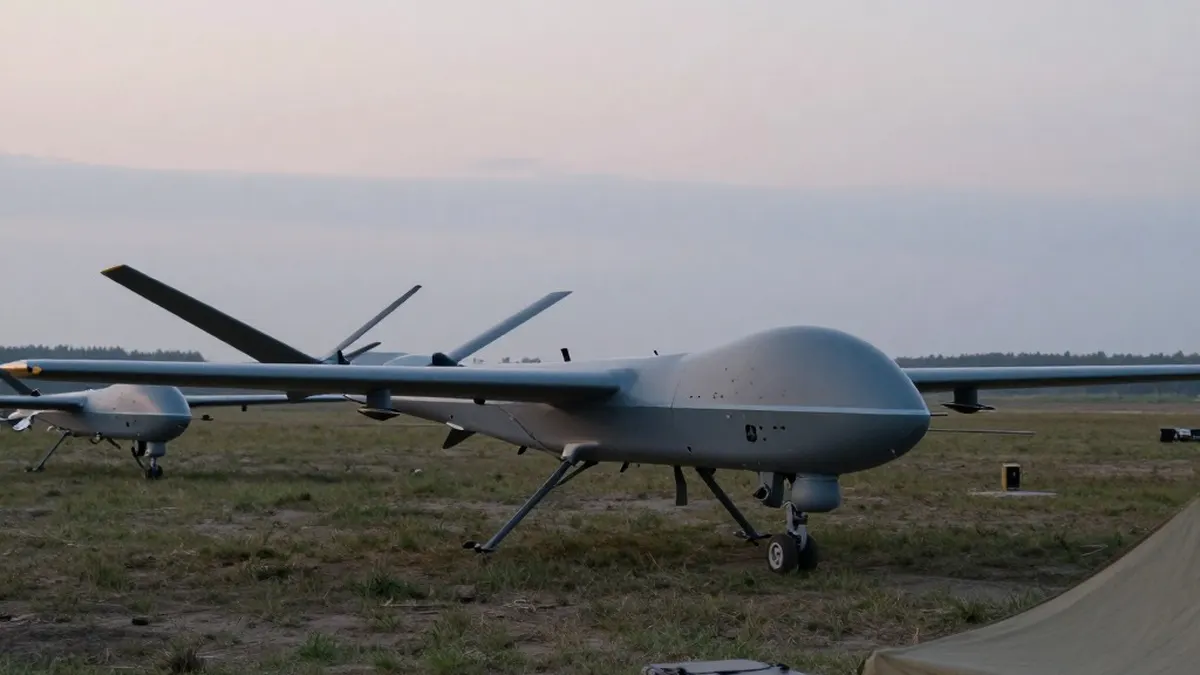
Ukraine has faced significant operational challenges in its fifth year of war against Russia due to disruptions in its access to Elon Musk's Starlink and Starshield networks. The country relies heavily on these satellite systems for drone operations, and recent throttling of the military-grade Starshield service caused drones to lose connection and crash midflight. This incident highlighted the critical dependence of the Ukrainian military on uninterrupted satellite connectivity for both defensive and offensive capabilities.
The restrictions began on Oct. 13, when Ukrainian soldiers reported that speed limits had been imposed on their Starshield terminals. When drones exceeded these limits, their internet connections were cut off, rendering them inoperable. Sources indicated that SpaceX imposed these restrictions unilaterally without prior notice to the military. This disruption prevented Ukraine from effectively using Starshield to intercept Russian Shahed attack drones and conduct mid-range strikes, which typically require speeds of at least 160 km/hr.
President Volodymyr Zelenskyy suggested that Musk throttled the network at the request of U.S. officials, although Musk denied direct involvement. The world's richest man stated on social media that speed limits are decided by the U.S. military and the President. He emphasized that Starlink is a commercial service limited to civilian or defensive activities, while Starshield is a military product under U.S. government license. President Donald Trump also denied responsibility, claiming that the U.S. government controls the military network, though he later acknowledged that service had been restored.
The technical differences between the two networks are significant. Starlink, the commercial version, has a speed cap of 70 km/hr for moving vehicles. Starshield, which operates on the same constellation of thousands of low-Earth satellites, lacks this artificial cap and supports higher speeds. During the disruption, Ukrainian units experienced link drops at speeds as low as 90 km/hr, a significant reduction from the normal operational range. Analysts estimate that this degradation cost Ukraine tens of millions of dollars in lost assets and operational capacity.
Conflicting reports emerged regarding the restoration of full access. While some officials claimed restrictions were lifted on Oct. 15, Zelenskyy noted on Oct. 18 that the maximum speed remained limited to 161 km/hr. By Oct. 22, a Ukrainian government official stated that some units could operate at higher speeds at sea, but restrictions persisted for others, causing disruptions between 160 and 200 km/hr. Secretary of State Marco Rubio indicated that the U.S. was working with the team to unblock the service, noting that Starshield is a U.S. military purchase.
The satellite disruptions coincided with failures in U.S. intelligence early warning systems. Ukraine did not receive advance notice of major Russian missile strikes on Oct. 13 and Oct. 18. The Oct. 13 attack targeted energy infrastructure in Kyiv and Kharkiv, killing six people and leaving approximately 600,000 residents without power. U.S. officials attributed the failure to bad weather, a explanation Ukrainian officials questioned. By Wednesday, the warning system appeared to be functioning again, with Zelenskyy expressing gratitude for the restored intelligence flow.
The situation adds to rising pressure on the U.S. to support Ukraine as the war enters its fifth year. Deliveries of Patriot interceptor missiles have slowed, with Rubio describing them as the most in-demand product in the defense sector. Trump has expressed impatience with the conflict, recently waiving sanctions on Russia and agreeing to an energy ceasefire, which Zelenskyy says Ukraine is willing to honor but which Russia has not formally confirmed. The U.S. President has argued that Russia is more capable of sustaining casualties and that it is time for a deal.
The reliance on Starlink and Starshield underscores the technological dimension of modern warfare. Ukraine uses Starlink for general communications and Starshield for advanced drone guidance and sensor connectivity. With no direct competitor matching the coverage of Starlink's 11,150 satellites, alternatives like Amazon Leo remain far behind. The recent events have raised questions about the balance between private corporate control and military necessity in a global conflict.
Originally published by News Media House · Source: CBS News