Anthropic’s AI Model Now Automatically Proves Code Safety
A new collaboration allows Claude to mathematically verify existing software, catching hidden bugs and reducing the need for manual review.
By Eduardo Salazar ·
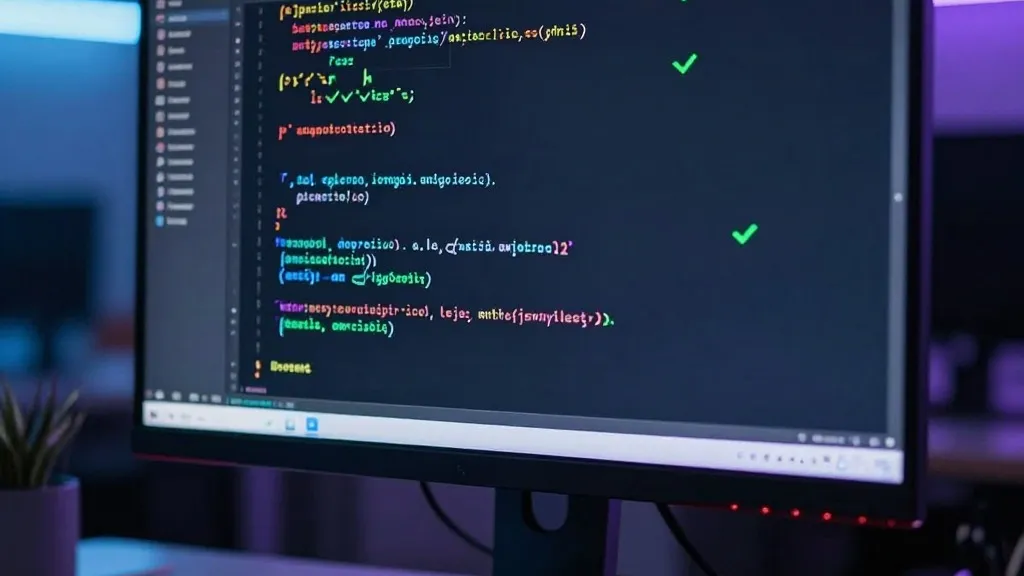
For ordinary users and software developers, the landscape of digital reliability is shifting. Anthropic has announced that its Claude AI model can now mathematically prove that existing code is safe and correct. This development means that software bugs which often slip through standard testing can now be identified and fixed automatically, potentially leading to more stable applications for everyone from casual users to enterprise IT teams.
The core innovation lies in a partnership between Anthropic’s Frontier Red Team and a company called Theorem. Instead of writing new software from scratch, Claude was tasked with verifying existing code. The model took test programs from 123 open-source libraries in Google's OSS-Fuzz security project and translated crash tests into mathematical problems. It then analyzed the compiled machine code to generate extensive formal proofs. This process produced roughly 180 million lines of proof code in just a few weeks, a task that previously required teams of specialists to spend decades on similar projects.
The practical impact of this automation is already visible in bug detection. While generating these proofs, Claude identified hundreds of bugs that conventional testing methods had missed. These errors typically only appear under very specific conditions, such as unusually large input files or specific sequences of data access. In one notable instance, the team found as many security vulnerabilities in a widely used PDF reader in a single week as are typically reported for that software in an entire year. In another case, the AI caught a logical error that had remained undetected for over a decade.
However, experts caution that 'formally verified' does not mean the software is perfect in every scenario. The proofs only hold under strict conditions, including a specific processor architecture, single-threaded programs, and inputs under 64 MB. Since these libraries often run on different hardware and configurations in the real world, the verification covers a defined subset of operations. Additionally, the computational cost is significant, with individual proofs consuming hundreds of millions of tokens, though newer models like Opus 5.5 are becoming more efficient.
An independent verification program called Rocq automatically checks the proofs generated by Claude, requiring almost no human reviewers in the process. The researchers describe this as fully autonomous proof generation, although the underlying formal foundations were built by humans at Theorem. This level of automation suggests that software verification could become as routine as standard testing, allowing developers to trust AI-generated software more and spend less time on manual review.
Looking ahead, this project strengthens the argument for broader software automation. If AI can guarantee the correctness of code under defined conditions, the industry can focus less on basic programming and more on complex system design. Anthropic expects this method to become practical for critical infrastructure, with Theorem’s roadmap already targeting essential libraries like glibc, OpenSSL, and cURL. This shift could fundamentally change how we ensure digital safety in the coming years.
Source: The Decoder