EU High Representative Sets Terms for Peace Talks with Russia
Kaja Kallas outlines Europe's core demands, including respect for Ukraine's borders and Russian accountability for war crimes, while prioritizing an immediate ceasefire.
By Francesca Youssef ·
Kaja Kallas, the European Union's High Representative for Foreign Affairs and Security Policy, has articulated the continent's primary demands for future peace negotiations with Russia. Speaking at a press conference in Brussels on November 16, following a meeting of the EU Foreign Affairs Council, Kallas emphasized that Europe will require Russia to respect Ukraine's sovereignty and territorial integrity. The EU representative stated that Moscow must also be held accountable for war crimes, provide compensation for the destruction caused by the conflict, and return children who were deported from Ukraine.
Kallas described Russia's current negotiating position as maximalist, noting that Moscow seeks to dismember Ukraine, push back NATO, and establish a veto over European security. She characterized these objectives as non-starters for European leaders. The EU diplomat highlighted that these specific demands mirror those Russia presented shortly before launching its full-scale invasion of Ukraine. She noted that in 2021, these demands served as a pretext for starting the war, whereas in 2026, they are being used as a pretext for keeping the conflict ongoing.
The High Representative provided a detailed list of Europe's clear demands towards Moscow. These include the respect for Ukraine's independence and its right to choose its own alliances. Kallas stressed that there can be no legal recognition of occupied Ukrainian territories. Furthermore, she asserted that Russian sabotage and cyber-attacks across Europe must come to an end. The return of deported children and payment for destruction were reiterated as essential components of the settlement.
A critical element of the EU's strategy is the establishment of a ceasefire. Kallas explained that negotiators view securing a ceasefire as their top priority, which must be achieved before drafting a comprehensive peace agreement. She stated that only after these initial steps can other issues be discussed. This approach reflects the European consensus that a stable cessation of hostilities is a prerequisite for meaningful long-term negotiations.
European foreign ministers have also clarified their stance on Russia's proposals to revise Europe's security architecture. Kallas reported that ministers were unequivocal in their position, stating that Europe does not need a new security architecture. Instead, the goal is to restore the existing framework that has been disrupted by the conflict. This response addresses Moscow's broader strategic ambitions regarding the continent's defense structures.
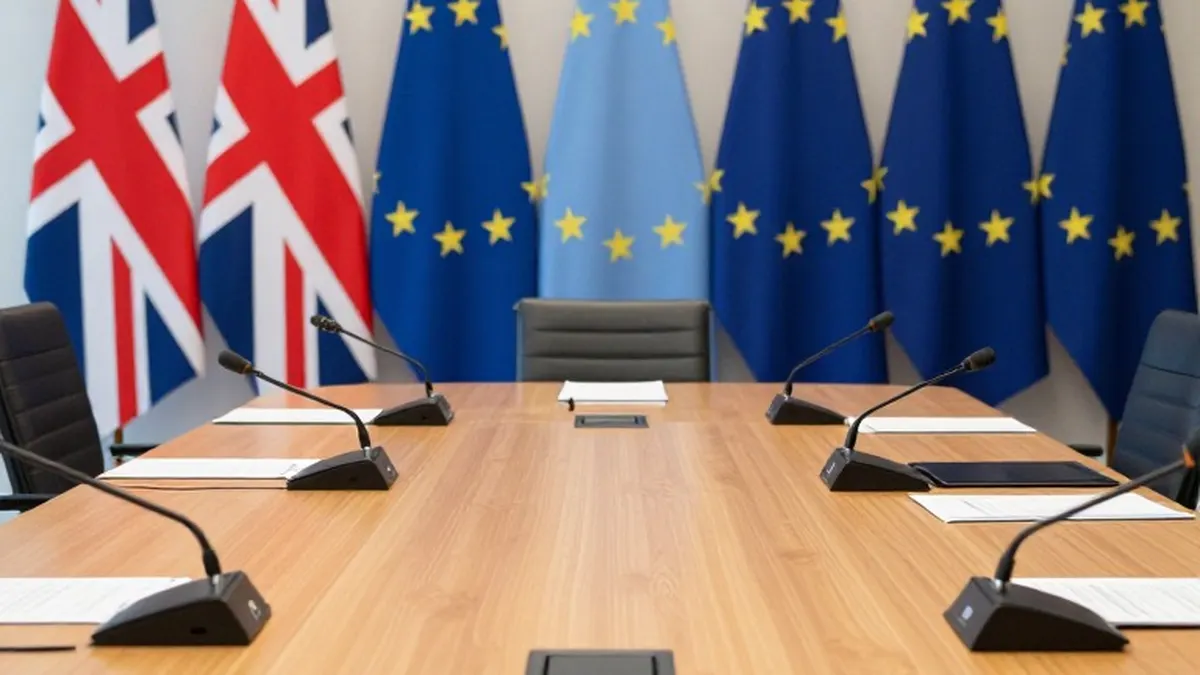
The context for these statements follows recent developments in EU coordination. On November 13, EU leaders gathered at an informal summit in Dublin to agree on a format for European representation at future peace talks. The agreed-upon negotiating team will include representatives from the E5 countries, which are Germany, France, the United Kingdom, Italy, and Poland. This group will be joined by officials from the European Commission and the European Council.
Paula Pinho, the chief spokesperson for the European Commission, confirmed on November 16 that this is the agreed format for the next rounds of negotiations. She noted that while the composition of the team is set, the specific venue for these discussions has yet to be determined. The EU aims to present a unified front as it moves forward with diplomatic efforts to resolve the conflict.
Kallas's remarks underscore the EU's determination to maintain a firm position while engaging in diplomatic channels. By linking current demands to pre-war conditions, the EU seeks to hold Russia to the standards it previously outlined. The focus on accountability and the return of deported children highlights the human and legal dimensions of the peace process beyond mere military cessation.
The upcoming negotiations will test the durability of the EU's unified approach. With the E5 countries and key EU institutions involved, the bloc hopes to leverage its collective weight in discussions with Moscow. The priority remains clear: secure a ceasefire, enforce accountability, and restore Ukraine's sovereignty as the foundation for lasting peace.