Settlers Seize Homes in Jericho, Raising Fears of Expanded Control
Palestinian residents in Jericho face displacement and violence as Israeli settlers take over properties, challenging the city's status under Palestinian Authority control.
By Francesca Youssef ·
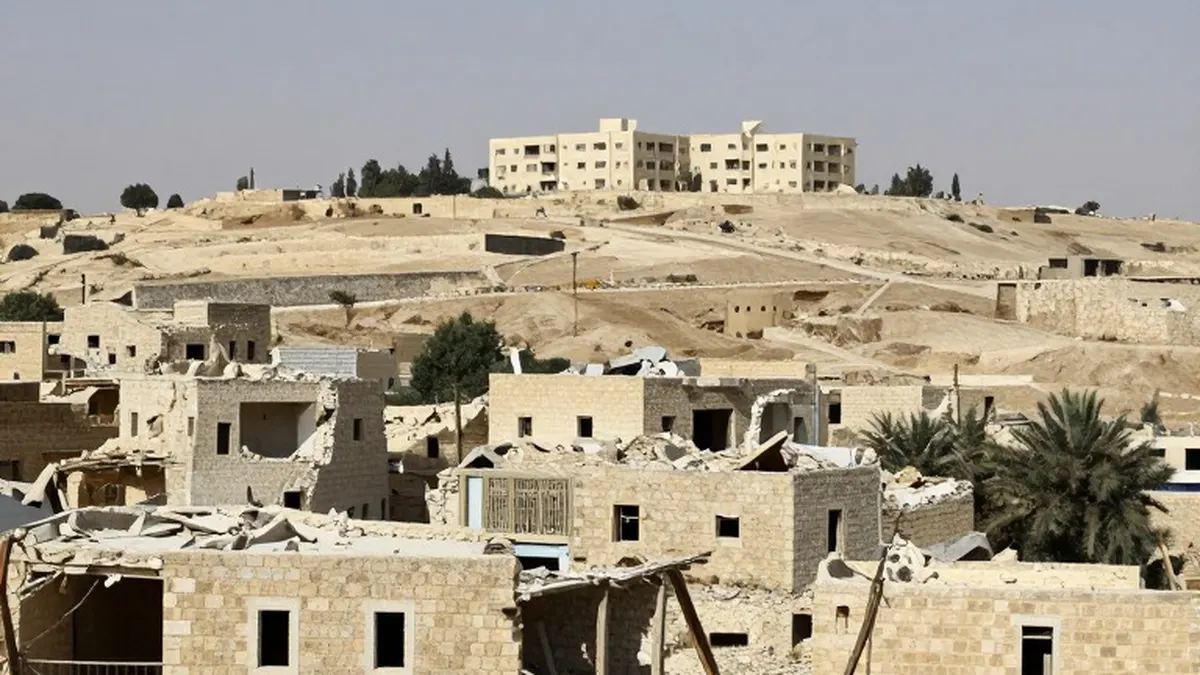
On November 4, 2026, Israeli settlers seized eight Palestinian homes in the Jericho area of the occupied West Bank. This action followed a months-long covert operation led by the Nachala settler movement, an organization internationally sanctioned, with backing from the settlement council in the northern West Bank. The incident marks a significant escalation in tensions within the region, affecting the Bedouin community in the area known as Diyouk al-Tahta.
Witnesses described scenes of physical confrontation during the takeover. Mustafa, a local resident, was barred from his land by settlers who beat him and his elderly father, the latter requiring hospital treatment. Other Bedouin families in the vicinity also faced assaults and were forced from their residences. Following these confrontations, many of the occupied houses were razed by settlers, who reside in settlements considered illegal under international law.
The presence of settlers has become increasingly intrusive for local families. During a visit to the area, a settler’s vehicle was seen speeding past residents, prompting them to move quickly to avoid it. In one incident, a young boy was cornered by a settler who slapped him before the child managed to escape on his bicycle. The boy explained that the settler was speaking Hebrew, a language he did not understand, and that he was caught off guard by the attack.
A key legal development this year allowed settlers to purchase Palestinian property within areas controlled by the Palestinian Authority. This decision has paved the way for settlement outposts to emerge in the centers of cities like Jericho. Such expansions bring military presence and movement restrictions to urban streets, altering the daily lives of Palestinian residents. This precedent distinguishes the situation in Jericho from previous takeovers in East Jerusalem and Hebron, where the Israeli army maintains direct control.
In those other regions, settlers often claim historical Jewish ownership or allege property purchases to justify taking over homes. Palestinian owners frequently challenge these claims in Israeli courts, sometimes proving that documents are forged. However, they rarely succeed in retaining their properties. In Jericho, which is administered by the Palestinian Authority, the settler presence is effectively reversing Palestinian control, prompting the Authority to launch an investigation into whether any facilitated the sales to settlers.
According to Palestinian law, residents may not sell their homes in the West Bank to Israelis. Legal experts noted that even if financial transactions occurred in these recent cases, the sales would remain illegal under both Palestinian and international law. They described the actions not as standard real estate deals, but as part of a broader campaign of takeover. Several arrests have been made as the Palestinian Authority works to determine if individuals facilitated these transfers.
Mahmoud Abu Fkheida, a farmer who inherited his land from his father and grandfather, described the psychological toll of the situation. He stated that the takeover is a campaign to uproot the community, similar to actions in other West Bank villages. Abu Fkheida expressed constant worry whenever he leaves his home to tend to his farm, fearing that he might receive news of an attack or fire at his residence.
The economic impact is also visible in the city, which relies heavily on tourism. Cable cars leading to the Mount of Temptation are running empty, and local facilities are deteriorating. On the eastern edge of Jericho, a new settlement stands above the ruins of Palestinian villas, with barren fields surrounding the area. The juxtaposition of new construction and destroyed homes highlights the shifting landscape of the city.
Abdel Qader Abu Khashan, another resident, expressed a deep sense of loss and dread. He noted that the current events foreshadow a difficult future for Palestinians in Jericho. He described the situation as one where hope for the future is becoming distant, rather than merely a matter of fear. The community finds itself surrounded by settlements and outposts, with the arid hills providing a stark backdrop to their changing reality.
Despite the tension, daily life continues in pockets of the area. In Diyouk al-Tahta, children play in the limited space remaining around their homes under the watchful eyes of their mothers. They appear unaware of the broader consequences of the settler presence, yet they are growing up in the shadow of these events, carrying the potential scars of this ongoing displacement.