France Moves to Station Troops in Lebanon for Joint Patrols
Paris is advancing a plan to deploy French soldiers alongside the Lebanese Army, aiming to fill the security vacuum expected after the UN peacekeeping mission ends.
By Francesca Youssef ·
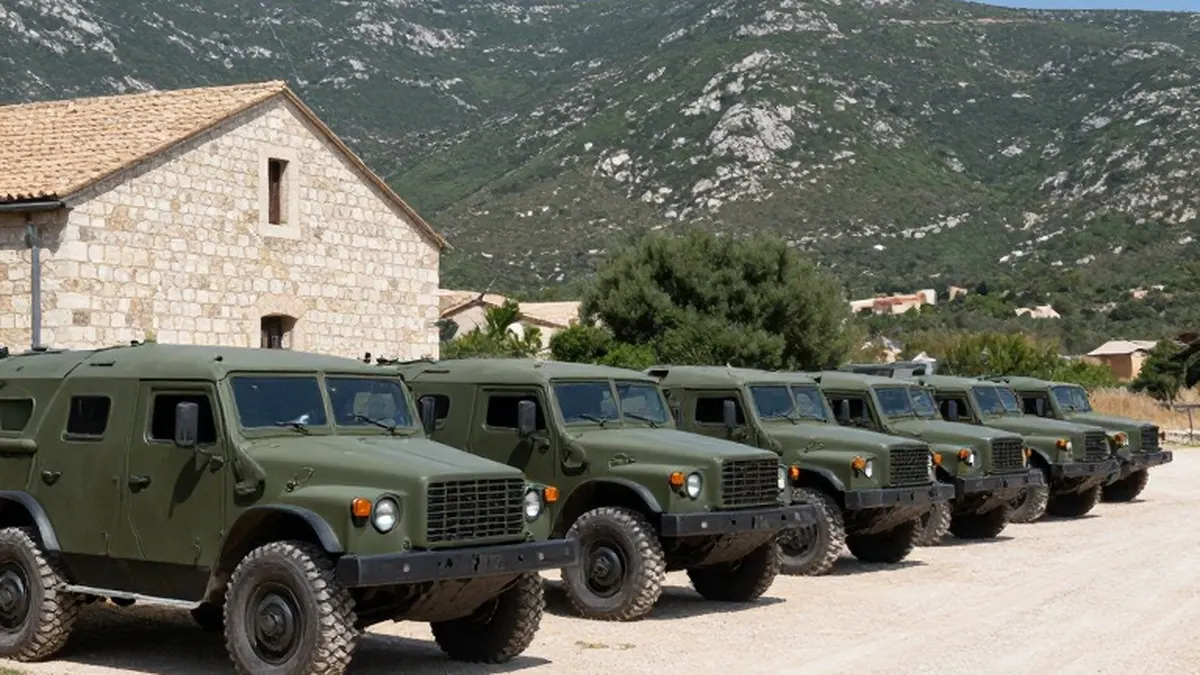
The French government is currently advancing a proposal to deploy its own military personnel to Lebanon. According to three sources familiar with the initiative, the plan involves conducting joint patrols alongside the Lebanese Armed Forces. While the exact number of troops is still under consideration, officials suggest France could send hundreds or potentially thousands of soldiers. A key objective of this move is to persuade other nations to join the effort and contribute their own forces.
Senior French officials have been in active contact with their American and Israeli counterparts to refine the proposal and secure broader understandings. However, a point of contention has emerged regarding the geographic scope of the deployment. Israel has indicated that it does not want the French force stationed south of the Litani River. Despite these discussions, France has so far faced difficulty in convincing other countries to participate in the multinational force.
A significant aspect of this initiative is its legal framework. The proposed force would operate as an independent action by French President Emmanuel Macron's government rather than under a United Nations mandate. This distinction is crucial because it makes the deployment harder for Israel and the United States to block, even if a formal agreement between all parties is not reached.
In addition to patrol duties, France intends to strengthen the capabilities of the Lebanese military. The plan includes establishing training bases within Lebanon and sending specialized teams to upgrade the army's skills. Sources clarify that these training facilities would not be located in the southern part of the country. These measures are part of a broader strategy to prepare for the conclusion of the UN Interim Force in Lebanon, commonly known as UNIFIL.
The timing of these French efforts coincides with the likely expiration of UNIFIL's mandate. If the mandate is not extended, which appears probable at this stage, the UN troops currently deployed in Lebanon are expected to withdraw by September 2027. France is working to ensure a smooth transition and maintain a security presence in the region.
Parallel to the troop deployment plan, Paris is promoting a separate initiative to deploy approximately 500 UN monitors to oversee the ceasefire. This proposal faces potential hurdles, as Jerusalem opposes it and Washington holds veto power in the UN Security Council, giving the United States the ability to block such a move if desired.
The French diplomatic activity comes as US Ambassador to the United Nations Mike Waltz visited Lebanon on Sunday and Monday. During his trip, Waltz held talks with senior Lebanese officials, focusing on the future of UNIFIL and the security arrangements in southern Lebanon. He stated that the visit was intended to assess the situation on the ground and push for changes to the existing peacekeeping framework.
Waltz met with several key figures, including Lebanese President Joseph Aoun at the presidential palace in Baabda, Prime Minister Nawaf Salam, and Parliament Speaker Nabih Berri. He also visited UNIFIL headquarters in Naqoura to evaluate the conditions ahead of the force's potential departure. The discussions centered on implementing the US-brokered framework between Israel and Lebanon, the disarmament of Hezbollah, and the transition to a new security arrangement.
During his remarks, Waltz emphasized that Washington expects Hezbollah to disarm and hand over its weapons to the Lebanese state. He stressed the principle that no country can have two armies and that Lebanese sovereignty must be fully restored. He noted that the Lebanese Armed Forces should be the primary mechanism for achieving this goal. Although he did not meet with Army Commander Gen. Rodolphe Haykal, Waltz explained that his limited time was devoted to political leaders and UN officials.
While the Trump administration is examining next steps for the UN presence and has expressed support for Lebanon's security institutions, Lebanese officials maintain their position on the post-UNIFIL arrangement. They insist that any new framework must retain an international presence under a UN Security Council mandate, ensuring continued monitoring, reporting, and coordination responsibilities in the region.