Guinea's Crackdown on Illegal Gold Mining Triggers Regional Tensions
Guinea's ban on illegal gold mining in Siguiri has led to mass arrests and deportations, prompting strong reactions from neighboring Burkina Faso and Mali while the country launches its first domestic gold refinery.
By Sergio Nunez ·
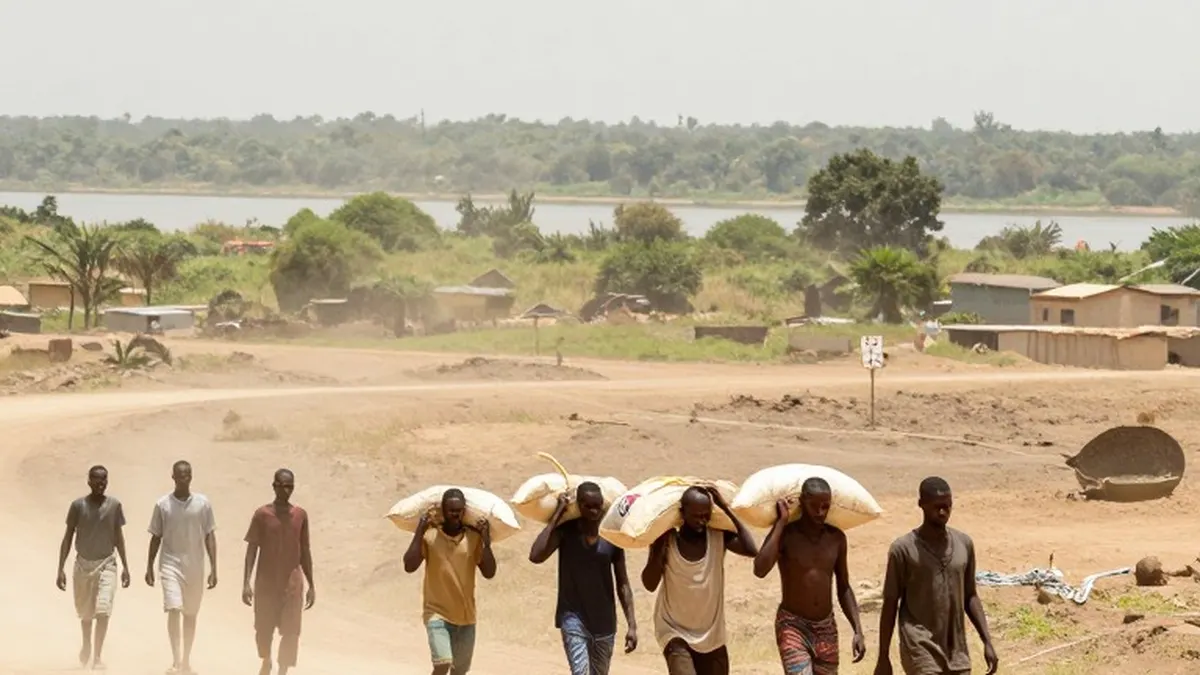
Guinea has halted illegal gold mining operations in the northeastern Siguiri region, a move that has resulted in the arrest of over a thousand people and sparked diplomatic friction with neighboring countries. General Mamadou Aliou Sow, the army spokesman in Conakry, stated that 1,263 individuals have been detained and transported to the capital for legal proceedings. The arrested miners include Guineans and nationals from Burkina Faso, Mali, Togo, Nigeria, Ivory Coast, and Ghana. Officers from the Criminal Investigation Division, National Police, and National Gendarmerie are currently conducting interrogations to determine the status of each detainee.
The decision to close the mining sites follows a formal ban aimed at curbing environmental degradation. Authorities argue that uncontrolled extraction practices deplete soil, destroy vegetation, and choke waterways. Toumany Sangare, chairman of the Siguiri civil society council, highlighted the use of chemicals that pollute local water sources. While the measure is intended to protect the environment, it has severely disrupted the local economy, leaving many workers without their primary source of income.
The impact on foreign workers has been particularly acute. Young gold panners from Burkina Faso reported being forced to leave the area abruptly. Some individuals described walking more than 200 kilometers to reach the Malian capital, Bamako. Noufa, a man in his early twenties who arrived in Siguiri in early October, expressed shock at the sudden change. Another Burkinabe miner, known as Mc One, explained that he had left home nearly five months prior to support his elderly relatives, only to face difficult conditions before his departure.
Guinean officials maintain that the ban is not targeted at foreigners but applies to all illegal miners. Mohamed Nabe, chairman of the Committee on Mining and Industry, noted that millions of Guineans are affected by the closure compared to a few thousand foreigners. He emphasized that while cross-border movements can raise security concerns, the primary motivations for the decision were environmental and structural, aiming to better regulate the mining sector.
Despite these explanations, regional reactions have been mixed. Morissanda Kouyate, Guinea's Foreign Minister, defended the move by noting that other nations have similar bans. However, Burkina Faso's Minister of Security, Mahamadou Sana, accused Guinean authorities of subjecting deported nationals to cruel and inhuman treatment. He alleged that the operation resulted in deaths and injuries, describing the handling of the miners as brutal.
Malian journalist Amadou Oumar Diallo criticized the lack of care provided to detainees. He argued that when freedom is restricted, the state has a duty to provide for the individuals, a responsibility that is costly. Diallo suggested that the Guinean government chose the easier path of mass deportation rather than adhering to these principles. While Mali initially described the expulsion as a sovereign decision, Prime Minister Major General Abdoulaye Maiga later labeled the situation a humanitarian catastrophe.
Maiga visited the border town of Kouremale on November 8 to observe the return of dozens of deported Malians. He expressed regret over the lack of coordination between the two neighboring countries. In response to the crisis, authorities in Mali and Burkina Faso have mobilized buses and trucks from Bamako and Ouagadougou to assist in transporting their citizens back home.
Parallel to the Siguiri crackdown, the Nimba Gold Refinery has begun operations in Conakry. This development places Guinea alongside other West African nations such as Burkina Faso, Mali, and Ivory Coast in processing gold domestically. The government aims to refine 30% of the 70 metric tons of gold mined annually within the country.
Experts have weighed in on the timing and implications of the new refinery. Dr. Ibrahim Diallo, a mining expert, suggested that authorities may want to control Siguiri mines to supply the new facility, noting that the operations there involved heavy machinery rather than simple panning. Patrick Schein, chairman of the Alliance for Responsible Mining, argued that building domestic reserves is logical but stressed the need for certification. He warned that if Guinea becomes a transit hub for subregional gold, it could unintentionally become a center for money laundering, as refined gold is harder to trace than raw ore.
Schein concluded that while refining gold in Guinea could lead to better traceability and fairer wages, the initiative must be properly executed to avoid these pitfalls. The situation in Siguiri remains a focal point for regional diplomacy as nations work to manage the flow of returned miners and the future of the West African gold market.