Smotrich proposes conditional support for Kahana as Knesset speaker
Religious Zionism leader Bezalel Smotrich has offered to back Yashar MK Matan Kahana for the speaker role if he excludes certain Arab parties from deputy positions, a move Kahana has rejected.
By Sergio Nunez ·
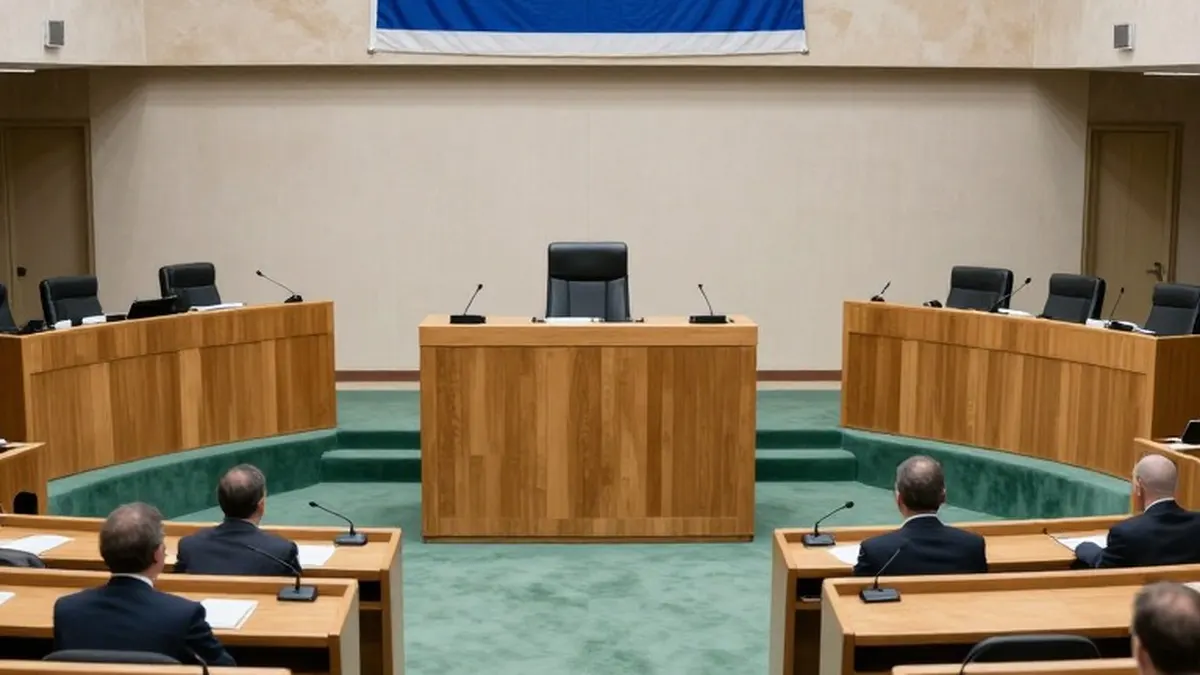
Religious Zionism leader Bezalel Smotrich stated on Monday that his party, in alliance with Likud, would support the election of Yashar MK Matan Kahana as Knesset speaker. This support comes with a specific condition: Kahana must pledge not to appoint deputy speakers from parties that do not recognize Hamas as a terrorist organization. The condition primarily targets the Arab-majority Joint List and Ra’am parties. Smotrich also demanded that Kahana resign if a future government seeks to replace him.
Kahana quickly rejected these terms, describing Smotrich’s comments as anti-statesmanlike. He urged the Religious Zionism leader to respect the outcome of the recent elections. In response, Smotrich accused Kahana of choosing Arabs over Jews. The formal vote on Kahana’s nomination, which aims to replace the current Likud speaker Amir Ohana, is scheduled for Tuesday.
The dispute intensified as the Knesset’s Arrangements Committee voted to recommend nine temporary deputy speakers. This list includes Ra’am MK Walid Taha and Joint List MK Ahmad Tibi. While these appointments require final approval by the full plenum, they are expected to pass. Arab lawmakers have served in these roles in many previous legislative terms. Deputy speakers work alongside the main speaker on the Knesset Presidium, which manages the agenda and approves parliamentary business, including private members’ bills.
During the committee debate, Likud MK Ofir Katz criticized the group for normalizing terror supporters. Otzma Yehudit MK Yitzhak Kroizer described the appointments as crossing a Rubicon that should not be crossed. B’Yachad MK Eitan Ginzburg, who was also elected as a deputy speaker, accused Likud of hypocrisy. He noted that Likud supported Tibi’s reappointment in 2022, a move that had been derailed earlier by opposition from Otzma Yehudit leader Itamar Ben Gvir.
Ginzburg emphasized that every member of the Knesset can serve in any position, a practice that has been consistent throughout the institution's history. In a letter to Kahana, Smotrich suggested that accepting his terms would ensure broad Zionist support across different political camps. He warned that if Kahana wins votes from what he called terror-supporting members, it would leave an indelible stain on the institution.
Kahana responded by rejecting the demand to disregard the public that makes up 21 percent of the population, referring to Israel’s Arab minority. He reminded Smotrich that these parties include factions with which he and his partners have cooperated in the past. During a faction meeting, Smotrich further accused Kahana of prioritizing the Muslim Brotherhood over brothers in arms and choosing those unwilling to condemn Hamas over partners in the war effort, while insisting he is not racist against Arabs.
The Yashar bloc, led by Gadi Eisenkot, won 48 seats in last month’s election. They have enough votes to elect Kahana with the support of the 19 seats held by Arab parties. This combined number significantly exceeds the 53 seats of the pro-Netanyahu bloc. However, the United Torah Judaism party, a longtime ultra-Orthodox ally of Prime Minister Benjamin Netanyahu, has not yet committed to a side. Its position could serve as a bargaining chip in coalition talks, where military exemptions for yeshiva students remain a major obstacle.
Netanyahu has reportedly pressured United Torah Judaism to oppose Kahana, while Eisenkot seeks its support for a future government. If the Eisenkot-led bloc successfully replaces Ohana, it plans to begin advancing legislation as early as Wednesday to repeal the previous coalition’s judicial overhaul. This dispute over deputy speakers is part of a broader campaign by the pro-Netanyahu bloc to delegitimize Arab parties after losing their parliamentary majority and to prevent Eisenkot from forming a government with Arab support.
Ra’am and Joint List leaders, including Mansour Abbas, Yousef Jabareen, Ahmad Tibi, and Ayman Odeh, have publicly condemned the October 7 massacre and the killing of Israeli civilians. However, they have stopped short of explicitly describing Hamas as a terrorist organization. Meanwhile, the Knesset’s new temporary Finance Committee held its first meeting, with B’Yachad MK Liran Avisar Ben-Horin becoming the first woman to chair the panel.
Ben-Horin pledged to scrutinize government spending and prioritize working Israelis who serve in the military. She stated that the committee would not be a rubber stamp and would examine where public money is going. She also vowed to focus on increasing public participation in education, military service, and employment. Additionally, Democrats party leader Yair Golan announced that MK Gilad Kariv will chair a temporary committee tasked with repealing key elements of the judicial overhaul. The committee is set to be established this week, with bills potentially advancing as early as Wednesday.