
Advisers warn that softening UK electric vehicle rules could damage industry
Campaigners and experts argue that reducing zero-emission sales mandates would raise costs for consumers and hinder the nation's net zero goals ahead of a key government review.
By Francesca Youssef ·
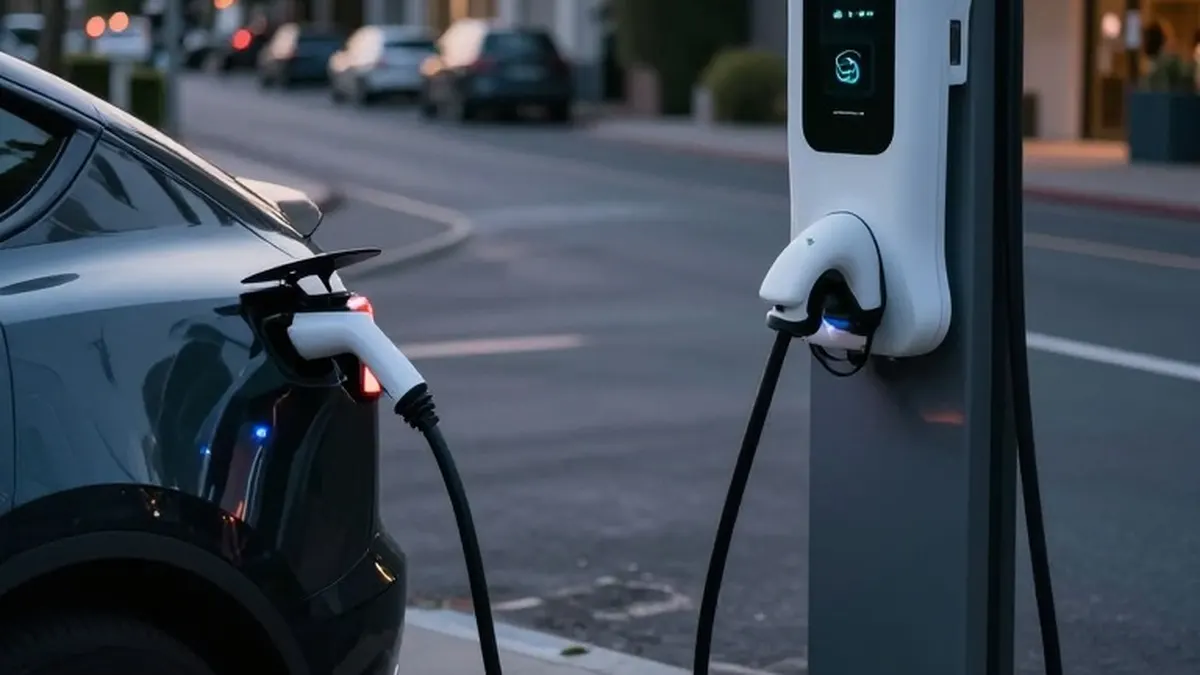
Campaigners and industry experts have cautioned that proposals to weaken the United Kingdom's electric vehicle targets could negatively impact both the car industry and consumers. These warnings come ahead of a significant intervention by government advisers this week, who are set to assess the broader implications of changing the zero emissions vehicle mandate.
The Committee on Climate Change is scheduled to write to ministers on Wednesday regarding how adjustments to the mandate might affect the cost of living and the country's net zero ambitions. Under the current rules, 80 percent of new car sales must be electric by 2030, rising to 100 percent by 2035. Recent reports suggest that the Labour government is considering reducing these specific targets.
Nigel Topping, the chair of the Committee on Climate Change, has a long history of advocating for the adoption of electric vehicles. Having worked in the automotive sector for two decades, he has consistently urged manufacturers to accelerate their transition to electric models, citing their superior efficiency, lower running costs, and reduced pollution. Topping views the UK's 2050 net zero target as a driver of economic growth, noting that leadership in decarbonisation fosters industrial competitiveness.
If the Committee's letter is critical of the proposed changes, ministers will face a difficult task in justifying the shift. Analysts argue that slowing the electric car market would impede efforts to lower living costs. Current data shows that refueling a petrol car can cost over 100 pounds, whereas fully charging an electric vehicle often costs less than 10 pounds. This significant difference in operational expenses is a key factor in the debate.
Ami McCarthy, head of politics at Greenpeace UK, described the potential dilution of sales targets as akin to driving with the handbrake on. She argued that while the UK has a positive narrative regarding electrification, the car industry is attempting to reverse this progress. McCarthy noted that aligning UK targets with the European Union would only slow down the transition, contradicting the Prime Minister's recent call for industry to take responsibility at the Cop31 UN climate summit.
The Society of Motor Manufacturers and Traders has argued that the existing targets are too demanding, forcing manufacturers to offer heavy discounts to meet sales quotas. Mike Hawes, the chief executive of the organization, stated that while billions are being invested in zero-emission vehicles, demand remains below the required levels. He called for fundamental changes to the targets, supported by consumer incentives and improved charging infrastructure, to protect UK competitiveness.
However, some experts challenge the narrative that manufacturers are struggling. One analyst pointed out that the UK is currently exceeding its sales targets by a significant margin, suggesting that the need for heavy discounting is exaggerated. They argued that electric vehicles are clearly the future and that the industry should be embracing them rather than resisting the shift.
The export market also plays a crucial role in this discussion. Most UK cars are sold abroad, and electric vehicle sales are growing strongly in the European Union. Given that Chinese competitors face tariffs in the EU, the UK could gain a competitive advantage by pushing harder for electric vehicles. Sales of battery-only electric cars rose by half last month compared to the same period last year, a trend highlighted by minister Katie White, who noted that an electric vehicle is sold in the UK every 52 seconds.
A government spokesperson reaffirmed the commitment to phasing out petrol and diesel cars by 2030 and achieving 100 percent zero-emission sales for cars and vans by 2035. The spokesperson stated that the ongoing consultation on the mandate would maintain a pragmatic and balanced approach to the transition, ensuring that legally binding net zero targets are met.