Houthis Recapture Key Areas Near Bab al-Mandeb After Government Redeployment
Houthis have advanced near the Bab al-Mandeb Strait after the Yemeni government repositioned its forces, a move officials describe as a strategic redeployment rather than a retreat.
By Francesca Youssef ·
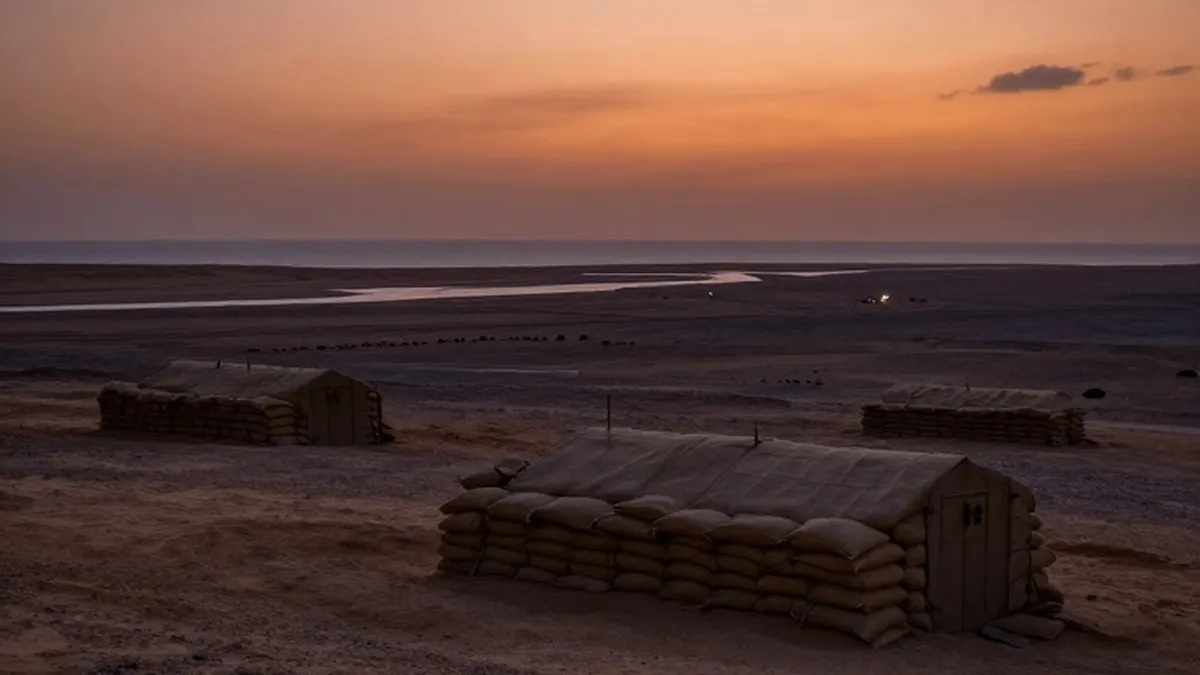
The Iranian-backed Houthi movement in Yemen has regained control of strategic territory near the Bab al-Mandeb Strait following a recent pullback by government forces. While the Yemeni government described the movement as a calculated redeployment, the rapid Houthi advance suggests the balance of power in this desert conflict has shifted significantly in their favor.
According to reports from Arab News, a source within the Yemeni presidency stated that the Southern Armed Forces moved their positions around Bab al-Mandeb and Dhubab to achieve three primary goals. These objectives include protecting the port city of Aden, reinforcing military fronts in Lahj, and creating the necessary conditions to break the Houthi siege of Taiz and liberate the province.
Government officials have framed the troop movement as a redistribution of forces rather than a withdrawal. They argue that the repositioning allows for a stronger influence over the course of the fighting. However, critics note that the government is currently dealing with significant setbacks, including the tightening Houthi grip on the highlands above Aden and the ongoing siege of Taiz.
The current frontline situation is complicated by recent political shifts. A year ago, the area was controlled by the UAE-backed Southern Transitional Council. Following a dispute with Saudi Arabia in late 2025, the council handed over these territories to the Yemeni government. This transition has introduced elements of chaos to the military frontlines, which are now dominated by Houthi control of the surrounding mountains and highlands.
Col. Majed Abdullah Al-Nuzaily, the Yemeni Armed Forces spokesman, emphasized that the commitment to breaking the siege of Taiz is a national stance. He described protecting Aden and lifting the siege as moral responsibilities aimed at countering Houthi violations. A key concern remains the potential for Houthi advancement along the ridgelines overlooking the coastal plain near Aden, which could allow them to outflank coastal troops.
One source indicated that the Southern Forces have repositioned themselves in the Al-Suqyah area, located approximately six to eight kilometers from Bab al-Mandeb. This keeps the troops within the operational range of the front. The Houthis, also known as Ansar Allah, control much of northern Yemen, including the capital Sanaa, and have become a major regional threat due to their arsenal of missiles and drones.
The movement originated in the 1990s among the Zaydi Shiite population in Saada province. After the death of founder Hussein Badreddin al-Houthi in 2004, his brother Abdul-Malik al-Houthi assumed leadership. The group expanded its influence during the Arab Spring and captured Sanaa in 2014, prompting a Saudi-led military intervention in 2015 to support the internationally recognized government.
The resulting civil war has devastated the country and created a massive humanitarian crisis. Although a UN-mediated truce in 2022 reduced large-scale fighting, it did not lead to a comprehensive peace deal. Iran continues to provide the Houthis with military assistance, including technology for missiles and drones, integrating them into Tehran's wider regional network.
The Bab al-Mandeb Strait is a critical maritime chokepoint connecting the Red Sea to the Indian Ocean. Since late 2023, Houthi attacks on commercial shipping using missiles and drones have forced major shipping companies to divert routes around Africa, increasing global transportation costs. The United States, Israel, and other nations have conducted airstrikes and naval deployments in response, yet the Houthis have demonstrated resilience against repeated military campaigns.
As the Houthis consolidate their gains near the strait, the Yemeni government appears stretched thin. Regional powers, including Gulf states and major Western nations, have supported Saudi Arabia to varying degrees but show little appetite for direct intervention. The outcome of the current shifts on the ground remains uncertain, with the region wary of another prolonged conflict.