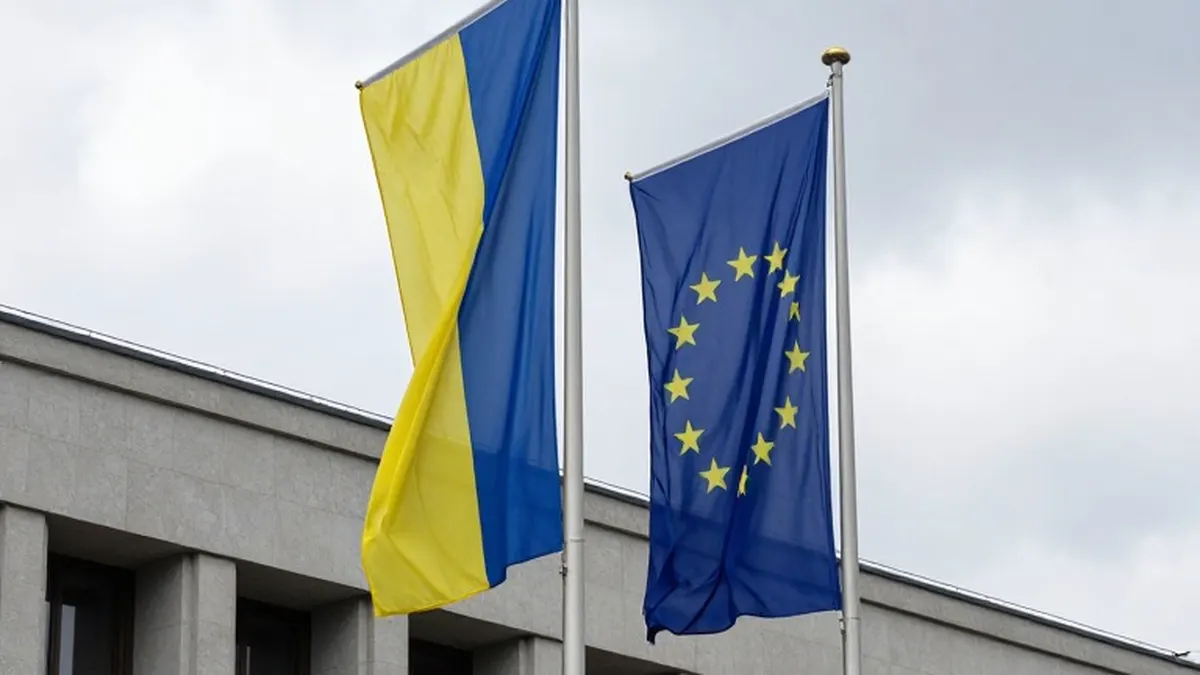
Ukraine faces internal hurdles in its bid for EU membership
Despite diplomatic progress with Hungary, Ukrainian authorities struggle to pass necessary reforms for EU integration and secure Western financial aid.
By Ananya Wright ·
Ukrainian President Volodymyr Zelenskyy recently adopted a confrontational stance regarding Western sanctions on Russia, arguing that they should only be lifted in exchange for tangible progress toward ending the war. Speaking in an interview with TSN on October 25, Zelenskyy cautioned against linking the removal of sanctions merely to the willingness of Moscow to negotiate. These remarks came just before the US midterm elections, reflecting a shift in the political landscape as the White House had moved toward a more accommodating approach toward Vladimir Putin.
Following the defeat of the US president's party in both chambers of Congress in early November, Kyiv hoped for a more balanced American policy. However, the previous attempts by the White House to reverse its position without fully considering Ukraine's interests raised questions about long-term alliances. This uncertainty has reinforced the strategic importance of European integration, a goal that has guided the Ukrainian state since the application for EU membership was signed on February 28, 2022.
In autumn 2026, Ukraine achieved significant diplomatic breakthroughs, particularly with Hungary. After the departure of Viktor Orbán, whose government had long obstructed Ukraine's accession, relations improved under the new Hungarian administration. President Zelenskyy and Hungarian Prime Minister Péter Magyar held a face-to-face meeting, and Ukrainian Parliament Speaker Ruslan Stefanchuk visited his Hungarian counterpart, Ágnes Forsthoffer. These steps have helped normalize bilateral ties, though a senior figure in the Servant of the People party noted that relations with Poland have recently deteriorated, suggesting a shift in diplomatic challenges.
Despite these diplomatic gains, the actual process of EU accession remains fraught with difficulty. Ukrainian sources indicate that while several negotiating clusters have opened, the hardest work lies ahead. The European Union is increasingly linking its accession requirements with those of the International Monetary Fund, meaning that the same reforms needed for financial aid are now also conditions for EU membership. This convergence limits the government's ability to postpone politically sensitive decisions.
A key area of contention is the independence of law enforcement and anti-corruption institutions. The so-called Kachka-Kos plan, a ten-point roadmap for reform, focuses on changing how heads of these agencies are appointed. While the government argues that constitutional limits prevent the creation of a selection board for the prosecutor general, other requirements are less flexible. These include repealing controversial amendments to criminal procedure laws and granting the National Anti-Corruption Bureau of Ukraine greater independence in forensic examinations.
Ukrainian authorities have been accused of quiet obstruction, a fact reflected in the European Commission's latest assessment, where Moldova outperformed Ukraine despite its smaller size. While anti-corruption bodies continue to uncover high-level cases, the parliament has failed to adopt a new anti-corruption strategy. Some political leaders are exploring an alternative route to membership as part of a broader peace settlement, potentially involving advance accession with gradual market access. However, the EU has been reluctant to formalize this approach, citing a lack of legal framework and negotiating mandates.
Domestically, the government faces a critical deadline regarding the Ukraine Facility, a major financial assistance program. Many promised reforms have stalled in the Verkhovna Rada, leading to postponed payments. If the required legislation is not in force by June 2027, Ukraine will lose access to these funds permanently. This situation highlights the tension between the government's public commitment to European integration and its internal resistance to the specific legislative changes required to achieve it.