Turkey asserts Hezbollah disarmament is impossible amid Israeli occupation
Ankara argues that the Lebanese group will not lower its weapons until Israel ends its military presence in southern Lebanon.
By Ananya Wright ·
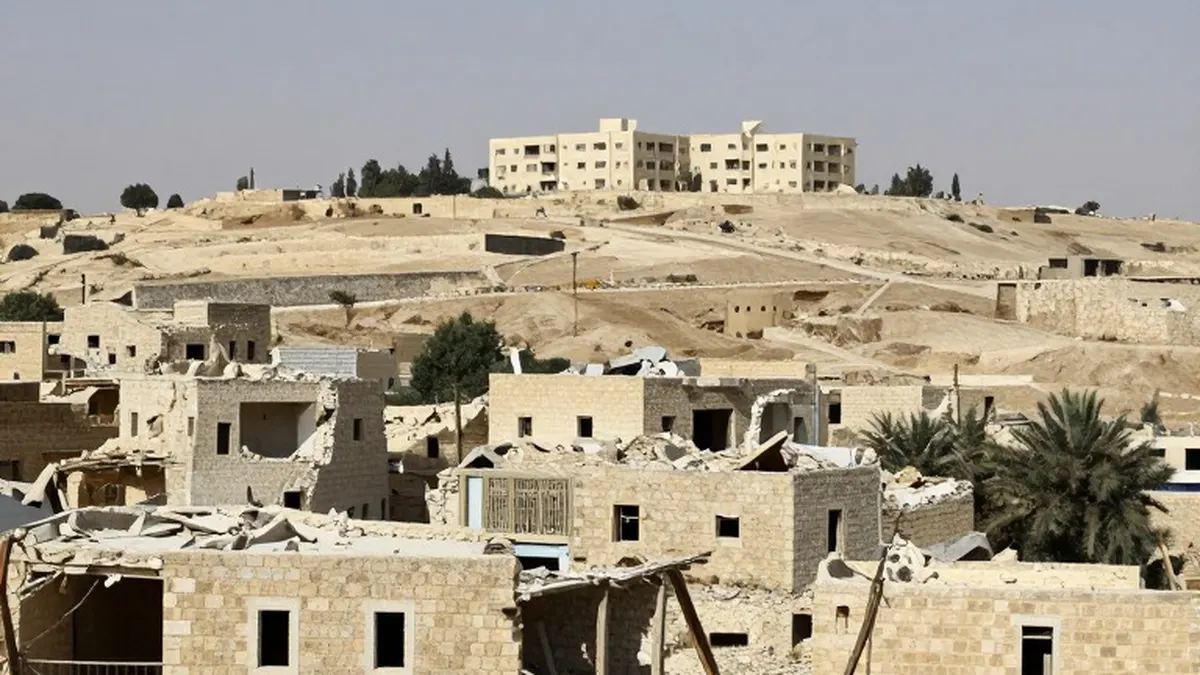
A senior Turkish official stated that Hezbollah’s disarmament in Lebanon can only be achieved if Israel ends its occupation of Lebanese territory. Speaking to Middle East Eye, the official, who requested anonymity, argued that the current situation presents an impossible equation for the Lebanese group. He noted that while Hezbollah has withdrawn north of the Litani River, Israel has continued to expand its military footprint on the ground.
The official criticized Israel for failing to honor its commitments, specifically the promise not to establish additional outposts. He remarked that asking Hezbollah to disarm while Israeli occupation continues to grow is a contradiction that must be resolved. This position aligns with broader Turkish diplomatic efforts in the region, where Ankara has recently intensified its engagement with the Lebanese government.
Turkey’s diplomatic push has included high-level visits, such as Lebanese President Joseph Aoun’s trip to Ankara in July. Last week, Bilal Erdogan, the son of the Turkish president, spent three days in Lebanon. He met with various officials, dignitaries, and community leaders, including representatives from Christian, Druze, and Alawite communities. Footage of a large welcome he received in the Sunni city of Tripoli circulated widely, sparking rumors about Ankara’s intentions to unite Lebanon’s Sunni political forces, though a source familiar with the trip denied that was the primary goal.
Ankara views the stability of Lebanon as inextricably linked to that of Syria. A Turkish official described Iraq, Syria, and Lebanon as a strategic belt essential for regional security. Bilal Erdogan’s visit was seen as an attempt to broaden Turkey’s influence beyond traditional Sunni Arab contacts. Lebanese researcher Sohaib Jawhar noted that Turkey is concerned about recent arrangements between Israel, Cyprus, and Greece, which could consolidate a regional order that excludes Ankara.
The future of Hezbollah remains a critical issue for Lebanon. Although the group has been weakened by repeated attacks and assassinations of its leaders, it has managed to regroup and continue its confrontation with Israel. The conflict escalated after Israel invaded Lebanon in March, following Hezbollah’s renewed rocket attacks in response to the war launched against Iran in February. Subsequent talks brokered by the United States established a framework for a gradual Israeli withdrawal in exchange for the disarmament of Hezbollah and the deployment of the Lebanese army in the south.
Progress under this arrangement has stalled in recent months. The Turkish official said that Ankara has informed US counterparts that their plan can only succeed if they halt Israel’s actions. Otherwise, Hezbollah will not disarm. US President Donald Trump has suggested that Syrian President Ahmed al-Sharaa could intervene to secure disarmament, but Damascus has publicly rejected this idea. Ankara also believes such a move could trigger another civil war in Lebanon if the Israeli component is not addressed.
Turkish officials accuse Israel of entrenching its presence by converting temporary military posts into permanent ones. Jawhar explained that Ankara recognizes Hezbollah’s disarmament cannot be isolated from the political and security environment that created the group. Israel’s continued occupation and attacks provide a fundamental justification for Hezbollah to retain its weapons. However, Turkey’s position does not necessarily imply full support for Hezbollah’s independent armed existence, as seen in Ankara’s efforts to bring weapons under state control in Iraq.
Negotiations between Israel and Syria have also faced obstacles. Turkey spent a year trying to bring the two sides to the table to update their 1974 disengagement accord regarding southern Syria. The Turkish official said Israel refused the proposal, preferring to put forward offers that Lebanon and Syria were likely to reject. A senior Israeli official blamed Syria for the lack of progress, citing a loss of appetite for a deal after international sanctions were lifted. Israel has also expressed reluctance to withdraw from the buffer zone it created after the fall of the Assad government in late 2024.
Despite these challenges, Ankara remains optimistic that a new Israeli government could adopt a more pragmatic approach, potentially allowing for rapid progress in Lebanon. The Turkish official warned that continued expansionism into Syria, Lebanon, Gaza, and the West Bank would continue to generate problems for the region. Jawhar added that Turkey’s relationships with Iran, the US, and Lebanese political forces position it to contribute to a political settlement, even if its direct influence over Hezbollah’s decision-making remains limited.