Gadi Eisenkot Challenges Netanyahu in Israel's Tight 2026 Election
With polls showing a near-even split, voters in the 120-seat Knesset race are weighing 19 years of Netanyahu rule against a former general's pledge of direct governance.
By Ananya Wright ·
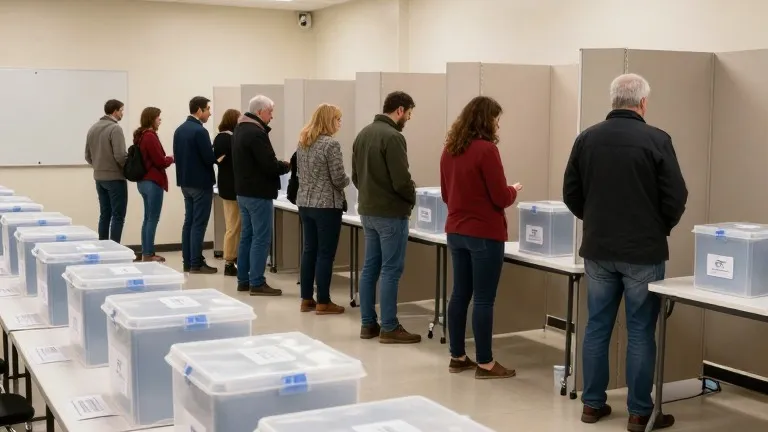
For millions of Israelis casting ballots on Tuesday, the choice is not a standard left-right contest but a binary decision on whether Benjamin Netanyahu remains in power. He first assumed the premiership three decades ago and has occupied the office for 19 of those years. Current polling indicates the pro-Netanyahu and anti-Netanyahu camps are running within a margin of error, making the outcome of the 120-seat election uncertain.
The leading challenger is Gadi Eisenkot, a former Israel Defense Forces chief of staff who entered politics four years ago. At a recent rally in Modi'in, located between Tel Aviv and Jerusalem, supporters praised his lack of theatrical flair. Eisenkot, the son of working-class Moroccan Jews, leads a party named Yashar, which translates to straight or direct. He proposes US-style term limits for prime ministers and cites the belief that power corrupts. Noa Sadeh, a 56-year-old attendee, stated she is weary of politicians who know how to talk and wants a leader focused on action.
The opposition coalition also includes Naftali Bennett and Avigdor Lieberman, both former figures in the nationalist right who previously collaborated with Netanyahu before breaking with him. On the far right, Itamar Ben-Gvir’s Otzma Yehudit party frames the race as a struggle to pull Netanyahu away from perceived leftward drift. Yishai Fleisher, a party spokesperson, argued in Bet Shemesh for more settlements in the West Bank and Gaza, a ministry to encourage voluntary Palestinian departure, and the death penalty.
Netanyahu has defined the campaign terms through posters offering a rhyming choice between Yamin and Falastin. These visuals link opposition leaders with parties representing Palestinian citizens of Israel, who constitute roughly one-fifth of the population. The central debate for the past weeks has been whether the anti-Netanyahu Jewish parties, which are forecast to outpoll his bloc but lack a majority, will rely on mainly Arab parties to form a government. Channel 14, a pro-Netanyahu outlet, has kept opponents on the defensive, including when its presenter Yinon Magal called Eisenkot a Moroccan monkey, a slur Eisenkot did not repeat at his rallies.
Observers note the puzzle of Netanyahu’s durability despite the 7 October 2023 massacres, the death of more than 70,000 Palestinians in the Gaza war, and an ongoing corruption trial. His allies claim army chiefs kept him uninformed of the attack, a claim without evidence. Oded Levi, who voted for Netanyahu in 2022, said the prime minister is responsible regardless of the timeline. Meanwhile, liberal expatriates are returning to vote, a group pollsters often miss that could decide the result by a single seat.
At a state ceremony marking the 1995 assassination of Yitzhak Rabin, Netanyahu sent a low-ranking minister in his place. Yair Golan, leader of the Democrats party, expressed optimism about a regional strategic process for security, though he avoided the term peace process. A widely shared video of young Israelis singing Rabin’s Shir LaShalom at a Negev music festival suggests a shift in public mood. The full flights home and the tight polling indicate the era of Netanyahu’s dominance is facing its most serious test in a decade.