Home Office faces criticism over attempts to disrupt online climate talk
Critics allege government officials pressured local authorities to cancel a launch event for Tribune magazine after blocking climate academic Andreas Malm from entering the UK.
By Francesca Youssef ·
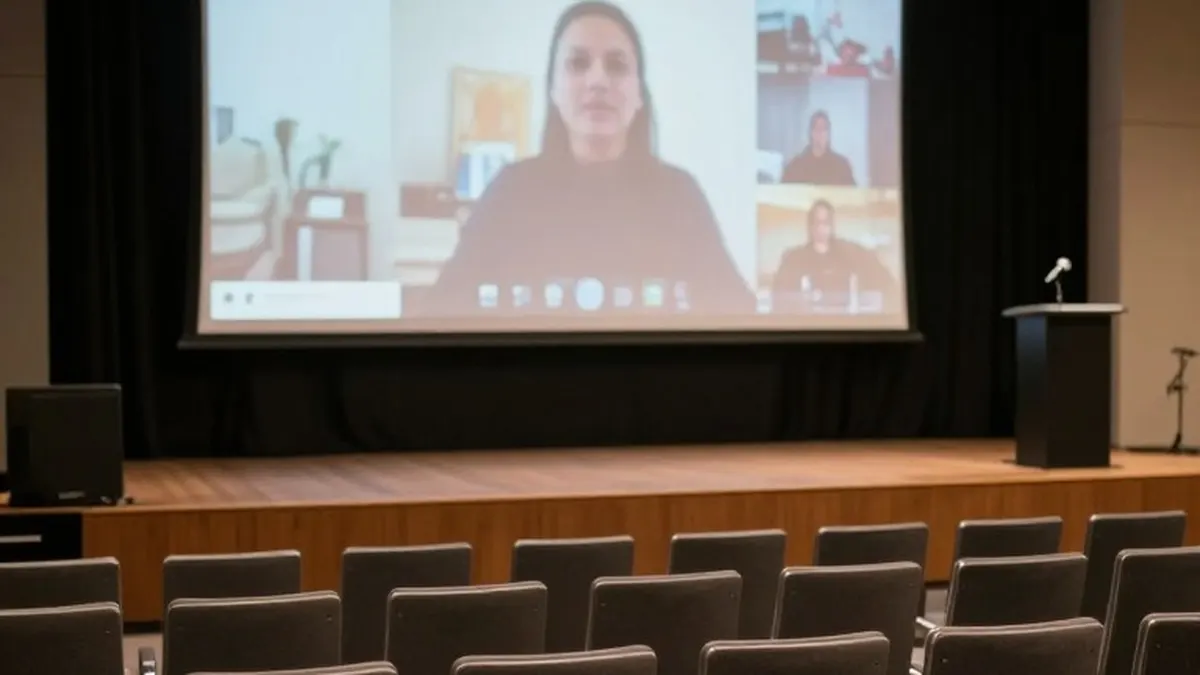
The UK Home Office has faced sharp criticism from political opponents and activists who claim its officials attempted to cancel an online talk by climate academic Andreas Malm. The controversy centers on a launch party for the socialist magazine Tribune, which took place in Hackney, east London, on 4 November. The event proceeded despite warnings from government departments that the gathering could potentially breach counter-terrorism legislation.
Shabana Mahmood, the Home Secretary, has been described by local leaders as having orchestrated an assault on free speech. Zoe Garbett, the Green Party mayor of Hackney, intervened to ensure the event went ahead. She wrote to Mahmood demanding an explanation, arguing that encouraging the cancellation of lawful public events undermines the right to speak freely.
Malm, the author of How to Blow Up a Pipeline, was prevented from traveling to the UK days before the scheduled date. Officials informed him that his presence was not considered conducive to the public good, though no further specific reasons were provided. Following this decision, the magazine organizers announced that Malm would participate via video link instead of in person.
Documents released under freedom of information requests reveal the extent of the pressure applied to Hackney Council. A Home Office email dated 12 October noted that Malm had made statements supporting direct action regarding Palestine and climate change. Although the department’s own assessment suggested the event was unlikely to meet the threshold for disruption, officials continued to urge the council to consider cancelling the booking.
The tension escalated the day before the event when a Home Office official described Malm and Huda Ammori, the cofounder of Palestine Action, as two speakers of concern. Ammori was challenging the proscription of her group in the Supreme Court on the same day. The government warned the council that the event could violate the Terrorism Act 2000 if it assisted in arranging a meeting addressed by a member of a proscribed organization.
Despite assurances that the final decision rested with the council, venue managers were informed of the government’s concerns. According to Tribune editor Oliver Eagleton, a manager subsequently contacted the magazine to state that the event would have to be cancelled. Garbett overruled this decision, allowing the launch party to proceed as planned.
In her correspondence with the Home Secretary, Garbett questioned why pressure was exerted on local officers to veto speakers. She highlighted the contradiction between the initial low-risk assessment and the subsequent push for intervention. The letter asked how the department reconciled these actions with local authorities’ statutory duties to uphold peaceful assembly.
A spokesperson for the Home Office maintained that it was categorically untrue to suggest the department pushed for the event to be cancelled. The spokesperson clarified that the decision was made by the council, informed by advice from the Home Office. The department denied attempting to override local authority decisions.
Malm described the situation as part of a terrifying crackdown on free expression in the UK. He noted a pattern of blocking individuals from entering the country due to their political support for Palestine. He questioned where this repression would end, citing the recent ban on books by Sally Rooney as a precursor to these events.
Huda Ammori argued that the Home Office’s actions proved her case in the Supreme Court. She stated that officials wrongly advised the council that a lawful political discussion would breach the Terrorism Act simply because of her participation. She emphasized that she has never been convicted of a crime, making the suggestion that her presence could make a discussion unlawful seem ludicrous.