Spain's 14.70 Euro Set Lunch Faces Structural Shifts
The daily menú del día, once a post-war economic tool, is eroding under inflation and changing work routines, serving 4 million customers daily.
By Sergio Nunez ·
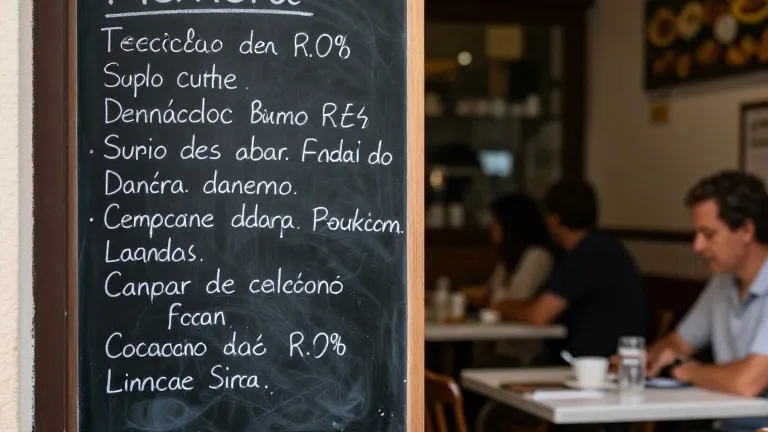
The average price of a daily set lunch in Spain has reached 14.70 euros, a cost that is testing the viability of a dining habit that defines the midday break for millions of workers. While the meal remains a staple, the economic and social forces surrounding it are shifting, threatening a routine that has persisted for decades.
Approximately 4 million of these meals are served on any given weekday. The practice involves a fixed-price menu consisting of a starter, a main course, and a dessert or coffee, accompanied by bread and a drink. This structure was originally codified in the mid-1960s by Manuel Fraga, the information and tourism minister under Francisco Franco. The goal was to demonstrate to foreign visitors that food in Spain was plentiful and affordable following the post-civil war scarcity.
Prices were initially regulated between 50 and 250 pesetas. The law mandated a soup starter and a main dish chosen from at least three options of egg, fish, or meat. To ensure quality, the accompanying quarter-litre of wine had to be a pure Spanish red or white with an alcohol content of at least 12 percent. In the early 1970s, the offering was renamed to the menú del día, a move designed to encourage local Spaniards to use the service rather than viewing it solely as a tourist attraction.
Spanish food journalist Lakshmi Aguirre, author of a new book on the topic, argues that the tradition is in trouble but not extinct. She notes that many Spaniards are unaware of the menu's origin as a state-sponsored tool. Aguirre observed that when she mentioned Fraga's role during her research, many people reacted with shock, stating that it illustrates how quickly national history can be forgotten. She describes the menu as a mirror of Spanish society, noting that nostalgia for the practice is growing as its frequency declines.
The decline is driven by rising energy and food costs, which strain family-run restaurants that rely on rotating daily choices. Many establishments have simplified their offerings to a single dish of the day. Others are adapting to demographic changes by adding Latin American staples. Consumers also face time pressures, with many opting for quick meals from home or supermarket ready-meals instead of dining out.
Ferran Adrià, a prominent chef, declared the daily set lunch dead in 2009, citing changing habits and the rise of bistro-style restaurants charging 20 to 30 euros for similar formats. Seventeen years later, the habit persists, though it serves fewer people. Aguirre emphasizes that the menu is more than a cheap meal. It functions as a social meeting point for families with limited budgets and individuals living alone who seek company during the workday.
Aguirre defines the value of the menú not just by its affordability, but by the time it allows for dining. Her criteria for a good venue include simple, non-frozen dishes, a regularly changing menu, and a regular clientele. The presence of avocado, burrata, or sourdough bread on a chalkboard menu is often a sign of a shift away from the traditional format, she argues. The core of the tradition remains the availability of a hearty, affordable meal at a fixed price during the midday break.
The menu's origins in state policy have largely faded from public memory, yet its structural role in the Spanish economy and social fabric remains. The 14.70 euro price point represents the current limit of what many small restaurants can sustain while maintaining the traditional three-course format. As costs rise and work patterns change, the balance between affordability and quality continues to tighten.